Your child has dyslexia, and they see the world differently. This unique way of thinking, which schools do not always recognize or value, is precisely what has helped many remarkable individuals make their mark in their field.
Many strengths often associated with dyslexia, such as creativity, visual thinking, intuition, and the ability to approach problems from a different perspective, can be found in visionary entrepreneurs, pioneering scientists, world-renowned artists, and exceptional athletes.
Here are seven careers where thinking differently is not a disadvantage. It’s a strength.

Entrepreneur
Richard Branson
Big-Picture Thinking Instead of a Traditional Academic Mindset
Traditional education often rewards fast reading, memorization, and written performance. These are areas where children with dyslexia may struggle. Richard Branson, founder of the Virgin Group, experienced this firsthand from an early age.
Yet what school perceived as weakness was, in reality, the development of a rare strategic skill: the ability to grasp the essence of a situation, to see the bigger picture rather than get lost in the details.
As Branson has often said:
“My dyslexia has helped me look at life differently.”
Learning to Delegate and Play to His Strengths
Branson realized early on that he could not do everything himself, and more importantly, that he didn’t have to.
He developed an exceptional ability to communicate ideas clearly, simplify complex concepts, and surround himself with people whose skills complemented his own.
“I have learned to focus on what I’m good at and delegate the rest,” he explains.
Many people learn this lesson only after years of professional experience. Branson learned it out of necessity as a child, and it became one of the foundations of his leadership style.
Turning Difference Into Innovation
What makes Branson’s story remarkable is that dyslexia was not simply an obstacle he overcame. It helped shape the way he approaches business.
His intuitive thinking, willingness to take risks, and creative, unconventional approach to problem-solving are qualities often associated with dyslexic thinkers.
School sometimes made him question his abilities. The business world helped him discover what those abilities truly were.
Athlete
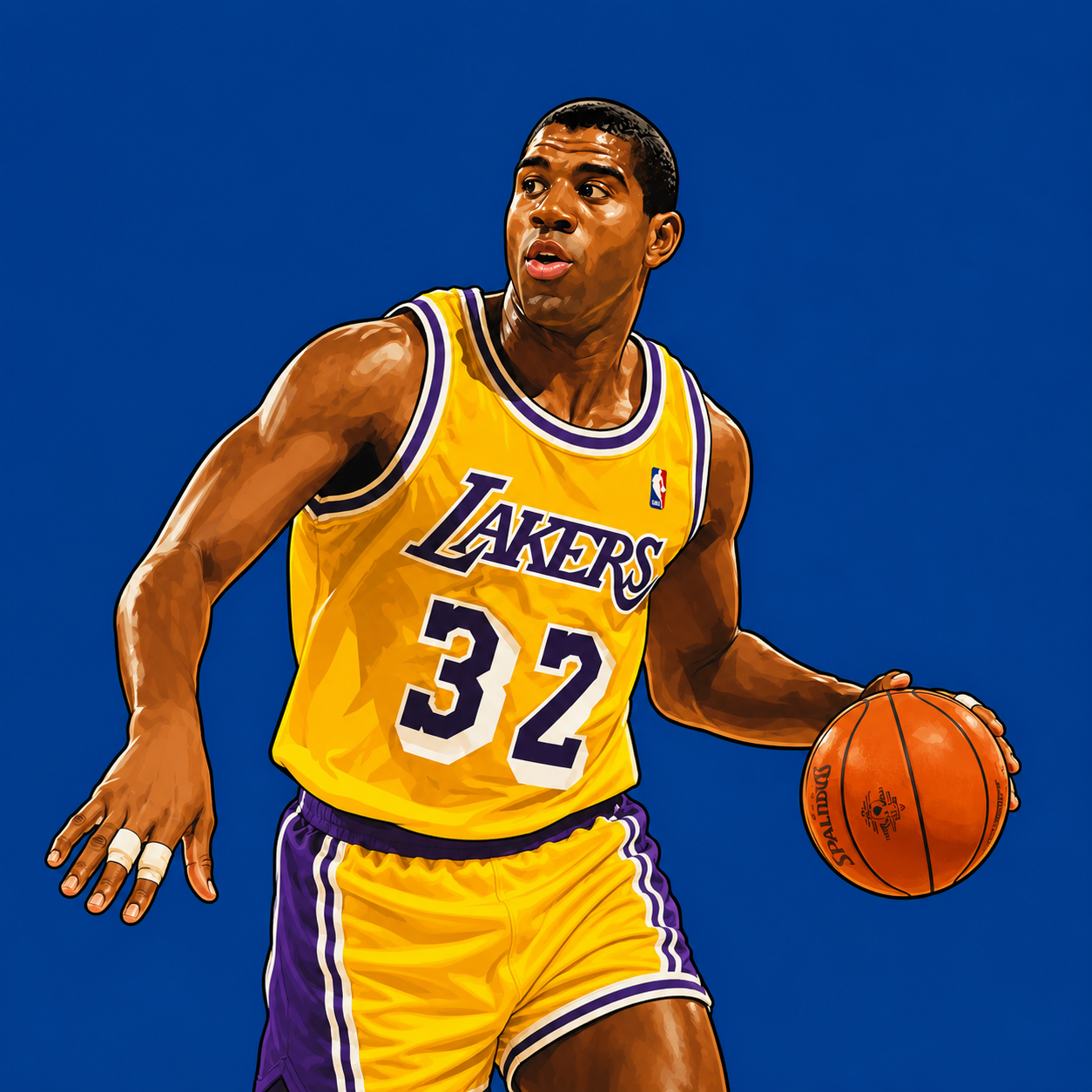
Magic Johnson
Intelligence Through Movement and Space
On the basketball court, Magic Johnson could see what others had not yet seen. His legendary court vision, the ability to anticipate plays before they unfolded, was admired by players, coaches, and commentators alike.
This exceptional spatial awareness and intuitive understanding of situations in real time reflect strengths often associated with dyslexia. Dyslexic brains process information differently, sometimes favoring a broad, holistic view over a step-by-step linear approach.
Learning Through Action Rather Than Words
Some dyslexic individuals learn more effectively through experience than through reading. Repetition, procedural memory, and hands-on practice often play a greater role than traditional academic learning.
In this context, sports can become a place where everything finally clicks.
On the court, thinking does not happen through words. It happens through movement, instinct, and the ability to instantly read the surrounding environment.
For a child who struggles in the classroom, discovering excellence in this different kind of language can be life-changing.
Resilience Built From an Early Age
Magic Johnson has spoken about the academic challenges he faced before finding in basketball a place where he felt truly capable.
The search for an environment where one can finally succeed often builds extraordinary perseverance.
Children with dyslexia learn early how to adapt, develop strategies, and keep going despite repeated setbacks. This resilience, forged through academic challenges, becomes a valuable asset in elite sports, where handling pressure and overcoming failure are essential to success.

Scientist & Explorer
Robert Ballard
Thinking Differently to Explore Differently
Robert Ballard is the man who discovered the wreck of the Titanic. He is also one of the few scientists who openly speaks about dyslexia as an integral part of the way he thinks.
“My dyslexia allows me to think differently,” he says.
For Ballard, this cognitive difference is not a barrier to scientific discovery. In some ways, it is what drives it.
Exploration, by its very nature, requires going where no one has gone before and asking questions no one has asked before. That takes intuition as much as method.
A Powerful Ability to Visualize
Exploring the deep ocean requires the ability to mentally picture places that cannot be seen directly.
Robert Ballard possesses this visual and spatial way of thinking to a remarkable degree.
During the expedition that led to the discovery of the Titanic, technological systems nearly failed. In almost complete darkness, Ballard described the moment with striking simplicity:
“We have nothing but the window, and it’s black.”
The ability to remain confident in uncertainty, to maintain a clear mental picture when instruments fail, is often what makes the difference.
🚀 Did you know?
NASA is often cited as an example of an organization that recognizes the value of neurodiversity. While some widely repeated claims about the number of dyslexic employees have never been officially confirmed, several strengths frequently associated with dyslexia are especially valuable in fields such as space exploration and engineering.
These include visual thinking, three-dimensional mental modeling, creative problem-solving, and the ability to understand complex systems as a whole.
In other words, some of the very skills that can make school more challenging can become significant advantages when it comes to imagining, designing, or exploring what has never been discovered before.
When Science Also Values Intuition
Science is not just about memorizing formulas or reproducing what has already been learned.
It also requires imagination, curiosity, boldness, and the ability to develop hypotheses where others see nothing yet.
Robert Ballard’s journey is a powerful reminder that academic thinking is only one path to scientific discovery. Intuition and experimentation are equally valuable ways of understanding the world.
Inventors Often Associated with Dyslexia
Steve Jobs transformed the way we interact with technology through products like the iPhone, placing user intuition at the center of product design.
Thomas Edison experimented relentlessly, enduring thousands of failures before developing the practical electric light bulb.
Henry Ford revolutionized transportation by rethinking manufacturing in a radically new way.
These three figures shared an unconventional mindset, a preference for experimentation over theory, and a willingness to challenge established ways of thinking.
Their dyslexia is frequently mentioned, but remains debated or unconfirmed by historical evidence. Unlike Richard Branson or Robert Ballard, none of them publicly discussed being dyslexic.
That distinction matters. The goal is not to create a list of “famous dyslexics,” but to recognize that throughout history, different ways of thinking have often changed the world.

Dentist
Virginie Vezié
A Highly Visual and Spatial Intelligence
Dentistry is a profession built on precision. Every procedure takes place within a tiny three-dimensional space, often measured in millimeters.
Mentally visualizing shapes, anticipating the structure of a tooth, or imagining a cavity before even touching it all rely on strong spatial thinking skills.
Interestingly, this is one of the strengths often developed by people with dyslexia.
Virginie Vezie, a dentist and author, challenges many common assumptions about academic achievement and medical careers. Her story demonstrates that dyslexia does not prevent someone from pursuing a career in healthcare. In some cases, it can even become an advantage.
Learning Through Action and Practice
Fine motor skills, hand-eye coordination, and procedural memory have little to do with reading lines of text.
Many dyslexic children who struggle to remember what they read develop remarkable learning abilities through experience and repetition. They often learn by doing.
In dentistry, as in many healthcare professions and skilled trades, this hands-on intelligence is at the heart of the work.
What school may not always recognize can become highly valued in a professional environment.
Looking Beyond School Labels
Virginie Vezie’s story resonates deeply with many parents of children with dyslexia.
In her book, she describes her journey with remarkable honesty:
“From the little girl who thought she was stupid to the woman who passed medical school entrance exams.”
That single sentence captures the gap that can exist between the image a child receives at school and what they are truly capable of achieving.
Dyslexia says nothing about intelligence.
It simply means that intelligence may follow a different path.

Architect
Frank Gehry
Thinking in Space Before Thinking in Words
Frank Gehry is one of the most influential architects of the twentieth century. His iconic creations include the Guggenheim Museum Bilbao in Spain and the Fondation Louis Vuitton in Paris.
His way of thinking is fundamentally three-dimensional.
As Gehry once said, “Architecture was, by definition, a three-dimensional object.”
For someone whose brain naturally processes space before words, architecture becomes a language of its own.
While dyslexia can make linear reading more challenging, it may also support the ability to mentally navigate complex shapes, structures, and relationships in space.
Creativity Fueled by Experimentation
Gehry is known for working with physical models, materials, and forms long before translating his ideas into technical drawings.
His approach is hands-on, intuitive, and built on experimentation.
This way of learning and creating closely mirrors how many dyslexic thinkers thrive: not through abstract concepts alone, but through direct interaction with the world around them.
Architecture offers a rare environment where this experimental intelligence is not only accepted, but celebrated.
Moving Beyond Conventional Forms
What sets Gehry’s work apart is his willingness to challenge traditional structures and expectations.
His buildings often seem to break away from linear logic in favor of something more visual, fluid, and almost sculptural.
This unconventional way of thinking may feel familiar to many children with dyslexia who are navigating an educational system designed around a more traditional style of learning.
What school sometimes labels as a difference can, in the right environment, become a signature strength.
Filmmaker
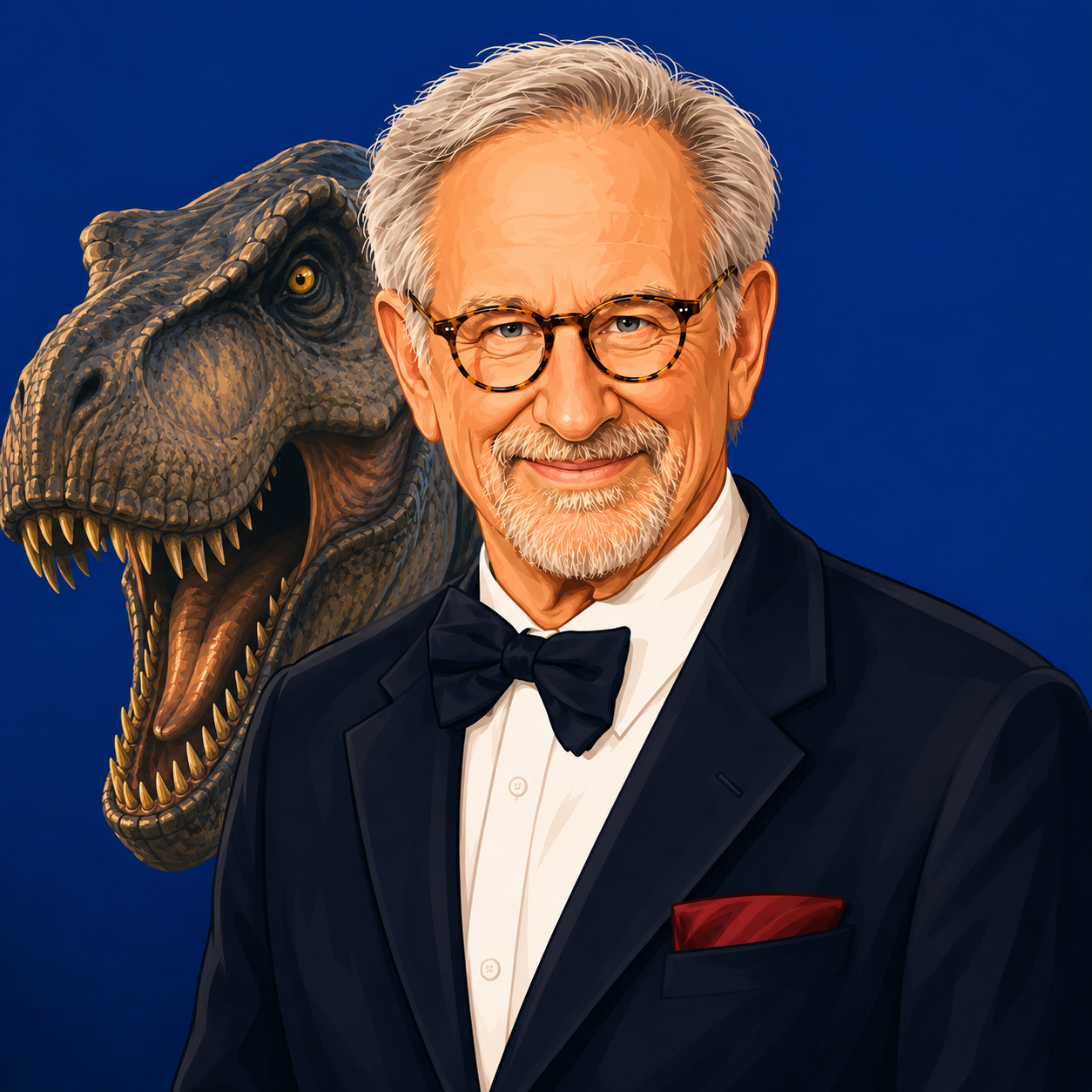
Steven Spielberg
When Images Become a Language
Steven Spielberg was diagnosed with dyslexia in his sixties.
For decades, he quietly carried the shame of struggling in school and the feeling that he was somehow less intelligent than others.
Learning that he had dyslexia was, in his own words, “a huge relief.”
But long before receiving that diagnosis, he had already found his way of expressing himself: filmmaking.
Images became his language. Through them, he was able to communicate with the world and tell stories that words alone might never have captured.
The Relief of a Late Diagnosis
How many adults still carry the scars of difficult school experiences without ever realizing that their brains simply work differently?
Spielberg’s story invites us to reflect on the impact school can have on a child when, year after year, they are made to feel like a failure despite their potential.
A diagnosis does not change who a child is.
What it changes is the way others see that child and often the way the child sees themselves.
An Extraordinary Visual Imagination
From E.T. and Jaws to Jurassic Park, Spielberg’s work reflects the mind of a storyteller who thinks in images, sequences, and visual emotions.
His ability to create entire worlds from a spark of imagination is a quality often associated with dyslexic thinkers, whose minds can be rich in mental imagery and less constrained by linear patterns of thought.
What school may not have recognized in his notebooks, the world eventually saw on the big screen.

Actress
Whoopi Goldberg
Finding Her Voice When Words Were a Struggle
For many years, Whoopi Goldberg believed she was less intelligent than other children.
Reading was difficult, her grades did not reflect her abilities, and the adults around her did not always understand why she seemed to be falling behind.
It was only later in life that she learned she had dyslexia.
Reflecting on her childhood, she once said:
“I was told I was stupid.”
Like many children with dyslexia, she grew up feeling that she had to work harder than everyone else to achieve the same results.
Developing Other Forms of Intelligence
When written words become a challenge, other talents often emerge.
For Whoopi Goldberg, those strengths included verbal expression, imagination, and storytelling.
On stage and later on screen, she developed an extraordinary ability to communicate, connect with audiences, and bring characters to life.
Her story reminds us that intelligence cannot be measured by academic performance alone.
Some children think in images, emotions, or real-world experiences. These ways of thinking are just as valuable.
Turning Difference Into Creative Strength
Whoopi Goldberg went on to become one of the few performers in history to win an Emmy, a Grammy, an Oscar, and a Tony Award.
It is an extraordinary achievement for someone who spent years doubting her own abilities.
Her story shows that creativity often grows from seeing the world differently.
While some people follow well-established paths, dyslexic thinkers sometimes develop unique ways of understanding situations, emotions, and human relationships.
What once appeared to be a weakness at school can, in the right environment, become a defining strength.
The light that changes the way you read
A lamp designed to help dyslexic readers read more comfortably, for longer, and with less effort.



What These Seven Journeys Teach Us
Behind each of these careers lies the same truth: many children with dyslexia grow up believing they are “bad at school.”
Many later discover that they were not less capable. They simply learned differently.
Entrepreneur, athlete, scientist, healthcare professional, architect, filmmaker, artist… these seven careers offer only a glimpse of the many paths where people with dyslexia can thrive.
Teaching, engineering, skilled trades, design, business, research, communications, and entrepreneurship are just a few of the countless possibilities.
These inspiring dyslexic role models remind us that there is no list of careers reserved for people with dyslexia, nor any careers that are off limits to them.
There are simply children who need to be shown that their way of thinking has value, and adults who can help them discover that value for themselves.